 |
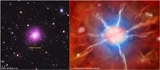
Cambridge, MA - Astronomers have found an extraordinary galaxy cluster, one of the largest objects in the universe, that is breaking several important cosmic records. Observations of the Phoenix cluster with NASA's Chandra X-ray Observatory, the National Science Foundation's South Pole Telescope, and eight other world-class observatories may force astronomers to rethink how these colossal structures and the galaxies that inhabit them evolve.
... Read more about Phoenix Cluster Sets Record Pace at Forming Stars |