2013

Exoplanet discovered with new technique that uses Einstein's relativity

May 14, 2013


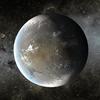
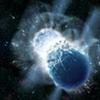
Artist's conception of Kepler-76b,
orbiting its elongated star
David A. Aguilar (CfA)

A new method for detecting planet that Loeb & Gaudi proposed in 2003 was demonstrated to work and a new planet, Kepler 76b, was discovered with it.

Read More:

Wired UK: http://www.wired.co.uk/news/archive/2013-05/14/planet-discovery-method

CFA Press Release: http://www.cfa.harvard.edu/news/2013/pr201312.html

Tel Aviv University: http://english.tau.ac.il/news/discovering_new_planet

Harvard Gazette: http://news.harvard.edu/gazette/story/2013/05/building-on-einstein/

Stars align at astronomy reunion: Event draws researchers from around the world

April 11, 2013

Kris Snibbe/Harvard Staff Photographer

Stars align at astronomy reunion: Event draws researchers from around the world.

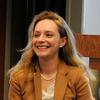
Left: Ruth Murray-Clay (from left), David Latham, Sara Seager, David Charbonneau, and moderator Charles Alcock were some of the faculty and alumni of the Astronomy Department that recently reunited for a luncheon, panel discussions, and evening reception.

Harvard Gazette Article

Harvard Astronomy's Supernova Forensics group has teamed up with Astronomy 100 undergraduate students to unveil the nature of the peculiar SN2012au

April 2, 2013

Harvard Astronomy's Supernova Forensics group has teamed up with Astronomy 100 undergraduate students to unveil the nature of the peculiar SN2012au - a massive star that exploded some 75 million years ago.  This energetic, slow-evolving and helium-rich explosion provides a golden link between the emerging class of "super-luminous" supernovae and other more seemingly normal supernovae that are far less bright.

Some observations of the supernova were obtained by two generations of Astro 100 students in 2012 and 2013 as part of the department's annual Spring Break trip to Fred Lawrence Whipple Observatory in Arizona. Students were the first to classify the new supernova in 2012 with the FLWO 1.5m telescope within just hours of its discovery by the Catalina Sky Survey.  A year later, the next group of students used the FLWO 1.2m telescope to show that SN2012au is still shining bright and thus evolving slowly.  A paper led by postdoc, Dan Milisavljevic, has been submitted to the Astrophysical Journal Letters with details on this unusual stellar explosion (link).

Article in Harvard Crimson

Berger, Drout, and Bieryla lead the Astronomy 100 Observing Trip to the Fred L. Whipple Observatory in Arizona

March 20, 2013
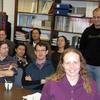
Each year undergraduate students enrolled in Astronomy 100 hone their practical astronomy knowledge by using the 48-inch and 60-inch telescopes at the Fred L. Whipple Observatory in Arizona.  This unique week-long trip during Spring Break includes a visit to the University of Arizona Mirror Lab, 3 nights of hands-on observing, nightly pot-luck dinners cooked by the students and teaching staff, and most importantly, an intimate view of how observational astronomers explore the cosmos.  The picture shows the 14 happy students who are currently participating in the observing trip along with Professor Edo Berger and Teaching Fellow Maria Drout (kneeling), with the dome of the 48-inch telescope in the background. The picture was taken by Allyson Bieryla, manager of the Astronomy Lab and Clay Telescope at Harvard.

Pan-STARRS Finds a "Lost" Supernova - read CFA press release

March 11, 2013

Cambridge, MA - The star Eta Carinae is ready to blow. 170 years ago, this 100-solar-mass object belched out several suns' worth of gas in an eruption that made it the second-brightest star after Sirius. That was just a precursor to the main event, since it will eventually go supernova. 

CFA Press Release

The preprint of the paper is available on this page:

https://www.cfa.harvard.edu/~nsanders/papers/12sk/summary.htm

Astronomically close CfA scientists say Earth-like planets are galactic neighbors

March 7, 2013

“The nearest Earth-like planet is probably 13 light-years away; astronomically speaking, that’s just a stroll across the park,” said Courtney Dressing (right), a doctoral student in Harvard’s Astronomy Department. At the press conference Dressing was joined by Professor David Charbonneau (center) and John Johnson, an assistant professor of astronomy at the California Institute of Technology.

A learner’s guide to the universe Astronomer Loeb homes in on ‘cosmic roots’ in textbook

March 4, 2013

Astronomy Department Chair Avi Loeb is helping prepare the next generation of astronomers to interpret the coming flood of data from new, more powerful telescopes with a new textbook, “The First Galaxies in the Universe.”

Read about Avi Loeb's work in this Harvard Gazette article: A learner’s guide to the universe Astronomer: Loeb homes in on ‘cosmic roots’ in textbook,

Gazette Article

Video of Lecture, The First Galaxies in the Universe | Center for Astrophysics

Dying stars source of life? Future evidence for extraterrestrial life might come from dying stars

February 28, 2013


Illustration by David A. Aguilar/CfA

A new study finds that researchers can detect oxygen in the atmosphere of a habitable planet orbiting a white dwarf (as shown in this artist’s illustration). Here the ghostly blue ring is a planetary nebula — hydrogen gas the star ejected as it evolved from a red giant to a white dwarf.

Read Article in the Harvard Gazette

Time Magazine Article, Could Tiny Stars Be Home to Mirror Earths?

Xarchive Paper

John Kovac, Assistant Professor in Harvard's Astronomy and Physics departments, has been awarded the Faculty Early Career Development (CAREER) Award by the National Science Foundation

February 28, 2013

John Kovac, Assistant Professor in Harvard's Astronomy and Physics departments, has been awarded the Faculty Early Career Development (CAREER) Award by the National Science Foundation. NSF describes these grants as their "most prestigious awards in support of junior faculty who exemplify the role of teacher-scholars through outstanding research, excellent education and the integration of education and research within the context of the mission of their organizations."

Kovac's research seeks to illuminate the earliest moments of our universe through precision measurements of the Cosmic Microwave Background (CMB). A theory known as "inflation" explains apparent paradoxes of cosmology by proposing that the universe went through a brief period of massive expansion just a tiny fraction of a second after the Big Bang. If this theory is true, it would leave a faint but observable signature in the polarization of the CMB, emitted 380,000 years later.

Bekki Dawson and Matt Walker won the Block Prize at the Aspen Center for 2013 Physics Winter Conference, 2013

February 21, 2013

Harvard Astronomy graduate student Bekki Dawson and CFA Hubble postdoctoral fellow Matt Walker won the Block Prize at the Aspen Center for Physics Winter Conference this year. Organizers of each winter conference choose promising young physicists to receive the Block Award.  This year, two out of the seven awardees are ITC members. For more details, see
http://www.aspenphys.org/physicists/winter/block.html

Pages